SlotBox: Cyprus blocking-list entry and licence check, 21 August 2026

Where the record stands on 21 August 2026
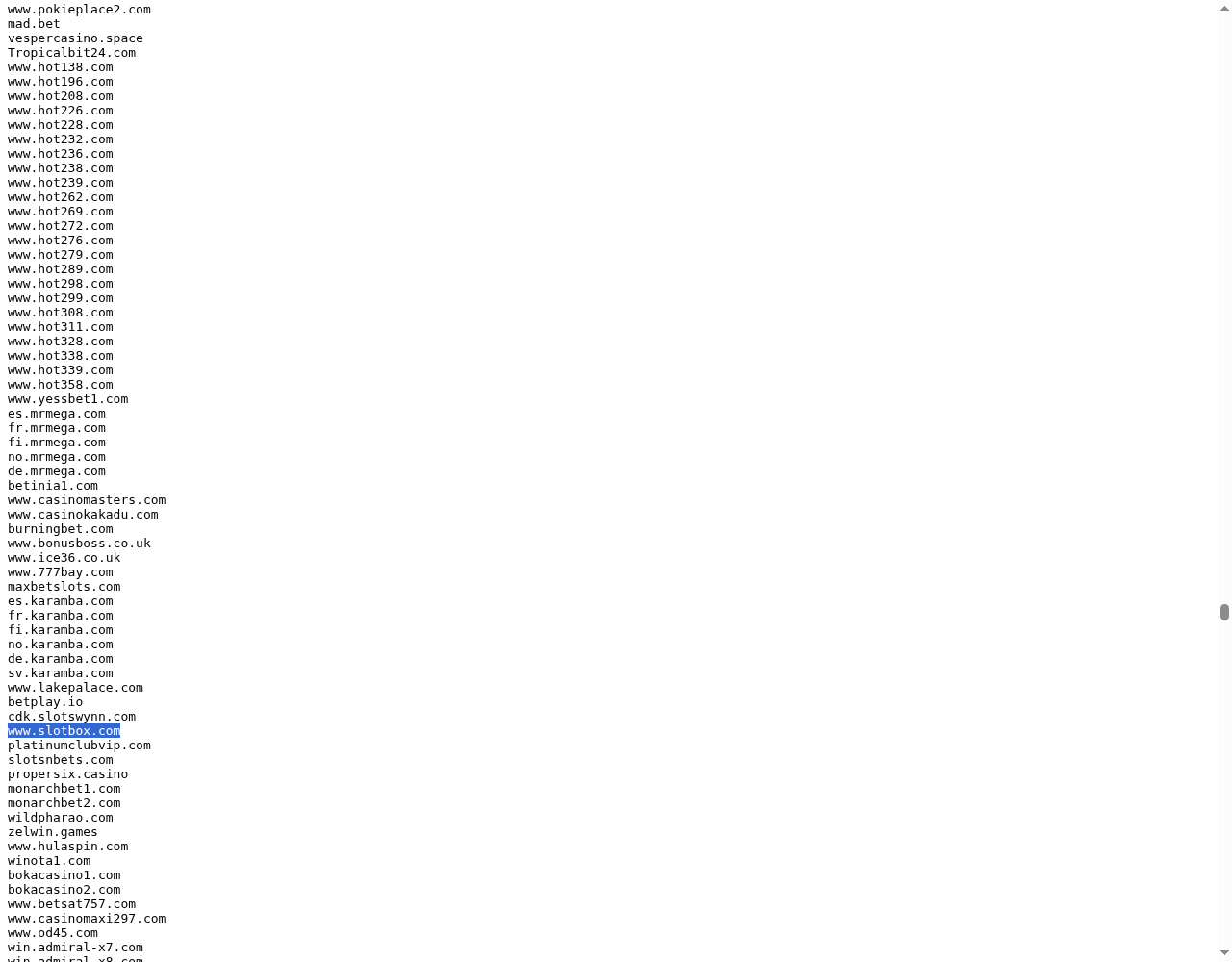
The only current primary document in the Cyprus file for this brand is the National Betting Authority blocking list, retrieved as plain text on 21 August 2026. The list header states a last update of 19/08/2026, and the copy read on the check date contains the exact domain recorded for SlotBox. Two days separate the register's own update stamp from the retrieval, which sets a narrow validity window: the position described below is the position across those two days, and a blocking list is a live register that can gain or lose entries without notice.
Nothing in the file establishes a Class B exact-domain match for the brand, and no legal entity is named by the Cyprus record. There is consequently no expiry date to watch, because no authorisation record exists for a date to attach to. That absence is the finding, not a gap to be filled by assumption.
Read together, the two facts give a plain position for a player in Cyprus: the recorded domain appears on the blocking list, and no national authorisation covers it. The assessment is red on the basis of an official adverse record, not on ratings or forum sentiment. The entry can be confirmed directly in the Authority's plain-text blocking list.
Host, operator and licence: three checks collapsed into one too often
A brand name, the hostname a browser actually loads, and the entity holding an authorisation are three different things, and a Cyprus verdict depends on all three lining up. In the file for SlotBox only the first two are documented and the third is empty. The recorded domain is matched against the blocking list; the operating company behind it is not identified by any Cyprus primary record supplied, so no company name, registration number or address is asserted.
That asymmetry matters when a promotional mail or a messaging-app tip names a brand rather than a hostname. One brand can present several hostnames, and only the exact string in the address bar can be compared with an official register, as set out in how Cyprus authorisation is recorded. Copy the hostname, strip everything after the first slash, and compare character by character, including hyphens, plurals and country suffixes.
| Check | Position on 21 August 2026 | Tier | Record |
|---|---|---|---|
| Recorded domain against the blocking list | Present in the current list text | Primary | nba-blocking |
| Class B exact-domain licence match | None on record | Primary | no matching entry supplied |
| Named operating company | Not established | — | none supplied |
| Licence expiry date | Not applicable; no licence record | — | none supplied |
| National self-exclusion coverage | Licensed online bookmakers only | Primary | nsep |
| Public brand and user chatter | Discoverable, non-verifying | User context | context-slotbox |
Scam or unlicensed: reading the entry without overstating it
A blocking-list entry is an administrative measure about lawful availability in Cyprus. It is a hard fact about status and it is not a court finding that anyone's money was taken or that a game was rigged. Stating more than the register supports helps nobody: it invites a rebuttal and it leaves a reader without the one instruction the evidence actually justifies.
What the entry does justify is caution about consequences that fall on the player rather than the service. Money sent to a domain outside the authorised field sits outside the national complaint framework, the national self-exclusion tool and every local dispute remedy, a pattern described further in complaints and scam warnings.
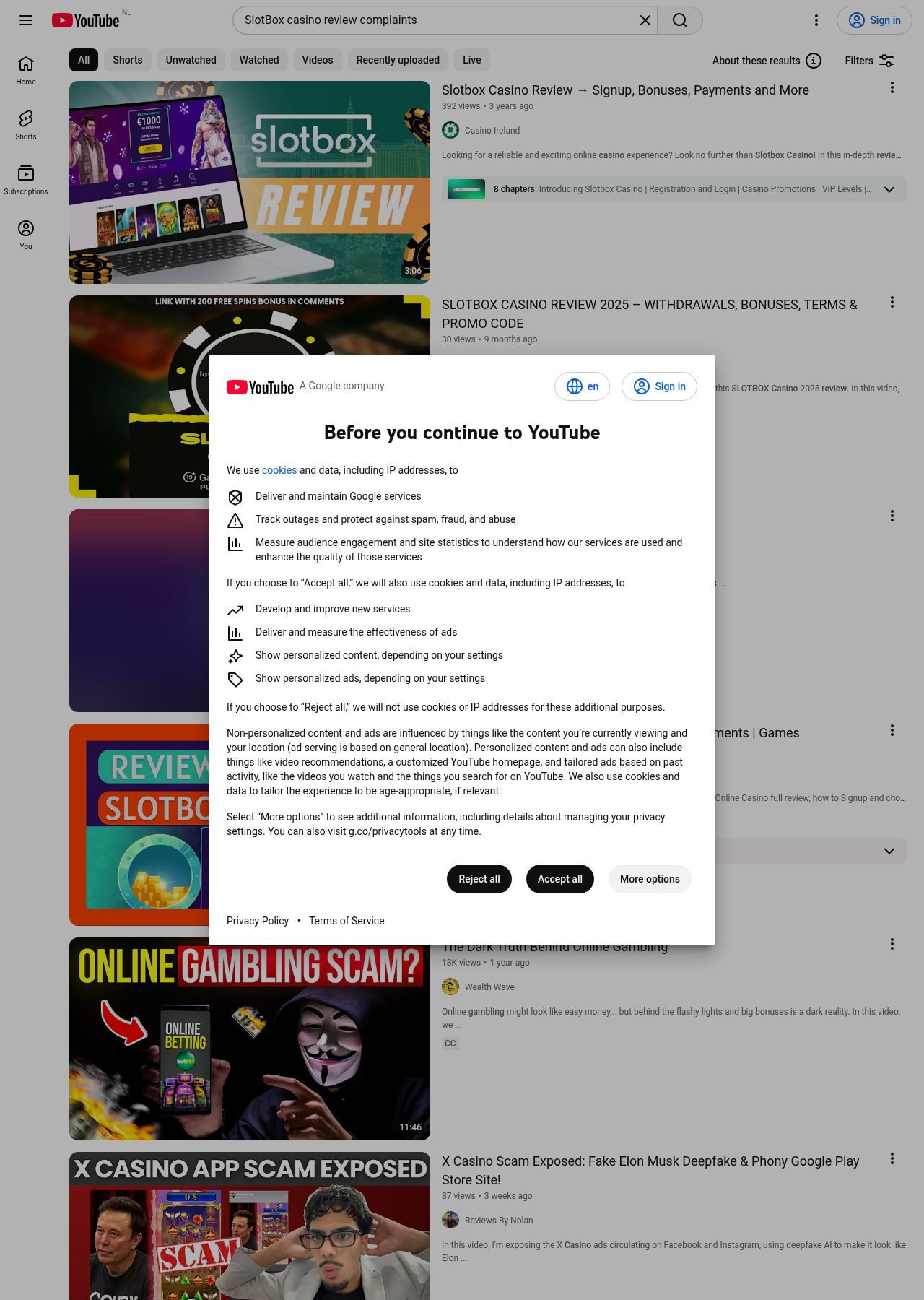
The discoverable public discussion about SlotBox, captured as a dated video-search snapshot, shows only that people are talking about the brand. It verifies no complaint, no withdrawal outcome and nothing specific to Cyprus, and it is retained as context.
For a legal wager placed from Cyprus, the workable route is a service that appears in the authorised field under the hostname it actually serves.
What an expiry date would prove, and what a missing one does not
An expiry date is only useful once an authorisation exists. Where a licence is on record, the date tells a reader when the entitlement lapses, when renewal falls due and when a favourable assessment must be revisited. Here no such date exists, so nothing can be scheduled against it and nothing about the operator's conduct can be inferred from its absence.
Two errors follow from mishandling that gap. The first treats a missing expiry as a clean bill of health, as though the absence of a lapsed date implied an active permission. The second treats it as proof of fraud. Neither holds. The narrower reading is correct: there is no authorisation record for the recorded domain, and there is a current blocking entry, so lawful local availability is the live issue.
What can be scheduled is a re-check. Because the register carries its own update stamp, comparing that header date against 19/08/2026 shows at a glance whether the list has moved. A register change is the trigger for revisiting the verdict; a change in promotional copy is not.
Deposits and payment records: what the file supports
No payment method, deposit limit, processing time or fee is documented for SlotBox in the supplied records, so none is listed. Anything quoted elsewhere about cards, wallets or transfers at this brand is unverified in the Cyprus file, and reading a promotional table as a payment record is how avoidable losses begin.
What can be stated is how money behaves when a domain is not authorised locally. A card payment leaves a trace with an issuer, which is the only leverage most players keep. A transfer pushed from a bank account is harder to reverse. A payment routed through an intermediary whose name differs from the service makes a later claim harder to argue, because the statement descriptor does not match what was used. The same checks are applied across the payment verification notes.
| Question before a first transfer | What the record shows | Practical step |
|---|---|---|
| Which methods are accepted? | Not documented in the Cyprus file | Treat on-site claims as unverified |
| Are deposits refundable? | No record; no local remedy applies | Ask the issuer about its claim window first |
| Whose name appears on the statement? | Not documented | Screenshot the descriptor with date and amount |
| Fees or currency conversion? | Not documented | Compare the debited sum with the credited balance |
| Local body for a payment dispute? | None without a national authorisation | Keep evidence; use the issuer route |
Withdrawals and money already inside an account
No withdrawal was tested and no processing terms are on record, so nothing here describes how quickly a payout would arrive or whether one would arrive. The outcome is unknown, and the sensible objective shifts from optimising a cash-out to documenting one.
Where a balance already sits with the service, the order of steps matters more than the wording of the request. Stop further deposits. Export or screenshot the account history, the bonus terms as they read that day, and every support exchange with dates visible. Request the full withdrawable balance in one attempt rather than several small ones, because partial requests multiply the points at which terms can be applied to the total. Keep the request inside the account system so a timestamped trail exists.
Where a card funded the balance, note the date of the last debit, since claim windows run from transaction dates rather than from the day a dispute opens. None of this guarantees recovery, and no local authority can compel payment from a domain outside the authorised field.
Identity checks when the recorded domain is blocked
Identity verification is routine at a licensed operator, and it is also the moment when the most sensitive documents leave a player's hands. The file documents nothing about which documents the service requests, how long they are retained or where they are processed, so no reassurance is available and none should be read into a familiar-looking upload form.
Two asymmetries deserve weighing. A passport scan, a selfie and a utility bill cannot be recalled once uploaded, while a bonus can be forgone at no cost. And a verification demand that appears only after a withdrawal request, rather than at sign-up, leaves less room to walk away.
Coverage is the other gap. The national access point at exclusion.cy operates for licensed online bookmakers, so a self-exclusion registered there does not reach a service outside that field. Device-level blocks and bank gambling blocks are the remaining practical tools, alongside the responsible gambling guidance.
Complaints: where they go and how long they take
A complaint about a domain carrying a current blocking entry and no national authorisation does not enter a local adjudication process, and waiting for one burns the weeks that matter for a payment claim. The realistic sequence runs internal first, payment provider second, and a report to the national authority as a status matter rather than a route to compensation.
Timing is the part most readers underestimate. Issuer claim windows count from the transaction date, internal escalations run on the operator's own clock, and a report about availability affects the register rather than a balance. Filing in parallel beats filing in sequence.
Support for the harm rather than the money runs on a separate track. The national programmes publish helplines 1454 and 1456 with defined audiences and service hours at safergambling.gov.cy, and those lines do not depend on where an account was opened. Immediate options are listed under urgent help.
| Route | What it can achieve | What it cannot | Evidence to attach |
|---|---|---|---|
| Internal complaint process | A payout, a correction, a written refusal | Independent review | Account history, dated messages |
| Card issuer or bank claim | Reversal of a specific debit in window | Recovery of wagered losses generally | Statement line, deposit screenshot |
| Report to the National Betting Authority | Register and availability action | Compensation for a private balance | Hostname, date, list reference |
| Helplines 1454 and 1456 | Counselling and referral | Financial adjudication | None required |
| exclusion.cy self-exclusion | Blocks at licensed online bookmakers | Coverage of unauthorised domains | Identity per that service |
Clone, mirror and look-alike checks
Where a hostname is restricted, look-alike variants tend to appear, and the failure mode is a player who believes the check is done because the brand name matches. A name check is not a hostname check.
Read the address bar after every redirect rather than before, and compare the final string with the exact entry on the register. Watch the usual swaps: an added country suffix, a hyphen, a plural, a transposed letter pair, or a subdomain arrangement that places the familiar word to the left of the real host. Confirm that the certificate is issued to the host that was typed. Treat any destination reached through a shortened link, a video description or a chat message as unverified until the hostname has been read directly.
If a variant is absent from the list, that means only that the exact string is unlisted today. It is not evidence of authorisation, since the licensed field is a separate register and holds no entry for this brand. Listed alternatives sit in the operator directory.
Risk register and open unknowns
The concrete risks follow from status rather than from documented misconduct. Lawful availability in Cyprus is restricted for the recorded domain; local dispute and self-exclusion machinery does not extend to it; and the operating entity is unidentified, which leaves no company to pursue, no registered address to write to and no supervisory relationship to invoke.
The unknowns are equally specific and are held open rather than closed with plausible filler: no named licence holder, no authorisation number, no expiry date, no documented payment methods or processing times, no withdrawal test, no adjudicated complaint and no dated Cyprus-specific user report.
One consequence deserves emphasis. A red assessment resting on an official adverse record is stable while the register reads as it does, but it speaks to status only. If the entry were removed, or if an authorisation appeared for the exact hostname, the assessment would move on evidence rather than on request.
Evidence chronology, method and corrections
The method is deliberately narrow: read the primary register for the exact hostname, record the register's own update date beside the retrieval date, keep official records apart from operator statements and public chatter, and leave every unsupported item as an unknown. No account was opened and no capture of the service is presented as an official record. The full approach sits in the verification method.
| Date | Record read | Tier | What it establishes |
|---|---|---|---|
| 19/08/2026 | Update stamp in the blocking-list header | Primary | The register's own currency |
| 2026-08-21 | Blocking list retrieved; recorded domain present | Primary | Restricted lawful availability |
| 2026-08-21 | National self-exclusion access point | Primary | Coverage limited to licensed bookmakers |
| 2026-08-21 | Support programme listing | Primary | Helplines 1454 and 1456 |
| 2026-08-21 | Public video-search snapshot | User context | Discussion exists; verifies nothing |
Corrections follow the same rule. A dated primary document that contradicts anything above, whether a register change or an authorisation naming the exact hostname, will be reflected with the previous position and the change date kept visible. Operator statements are published as statements, attributed and dated, through editorial contact; they do not convert an allegation into a fact.
Frequently asked questions
Is it legal to play at SlotBox from Cyprus in August 2026?
The domain recorded for the brand appears on the National Betting Authority blocking list read on 21 August 2026, and no Class B exact-domain match is on record. Lawful local availability is restricted, and any account opened through it sits outside the Cyprus framework.
Does a blocking-list entry mean the brand stole money from players?
No. The entry is an administrative measure about availability in Cyprus, not a finding of theft or of rigged games. No adjudicated complaint appears in the file, so any allegation of that kind stays an allegation until a dated competent record says otherwise.
Can a deposit be recovered if the domain is blocked?
No local remedy applies to an unauthorised domain, so recovery depends on the internal process and, where a card funded the payment, an issuer claim inside its window. Keep the statement line, the deposit screenshot and every dated message before filing.
Does a self-exclusion registered at exclusion.cy cover this service?
The national access point operates for licensed online bookmakers, so it does not reach a domain outside the authorised field. Device-level blocks, bank gambling blocks and the helplines 1454 and 1456 are the practical remaining options.
Is a mirror or alternative hostname a lawful workaround?
No. A variant absent from the register today means only that the exact string is unlisted; it is no evidence of authorisation, and no licence entry exists for this brand's hostname. Compare the final address after redirects, character by character.
What would change this red assessment?
A dated primary record: removal of the entry from the register, or an authorisation naming the exact hostname and its licence holder. Promotional claims, new payment badges or public praise would not, and the change date would be shown when the position moved.
Microsoft Bing