Rikstoto in Cyprus: scam or legitimate?
Two signals that appear to conflict
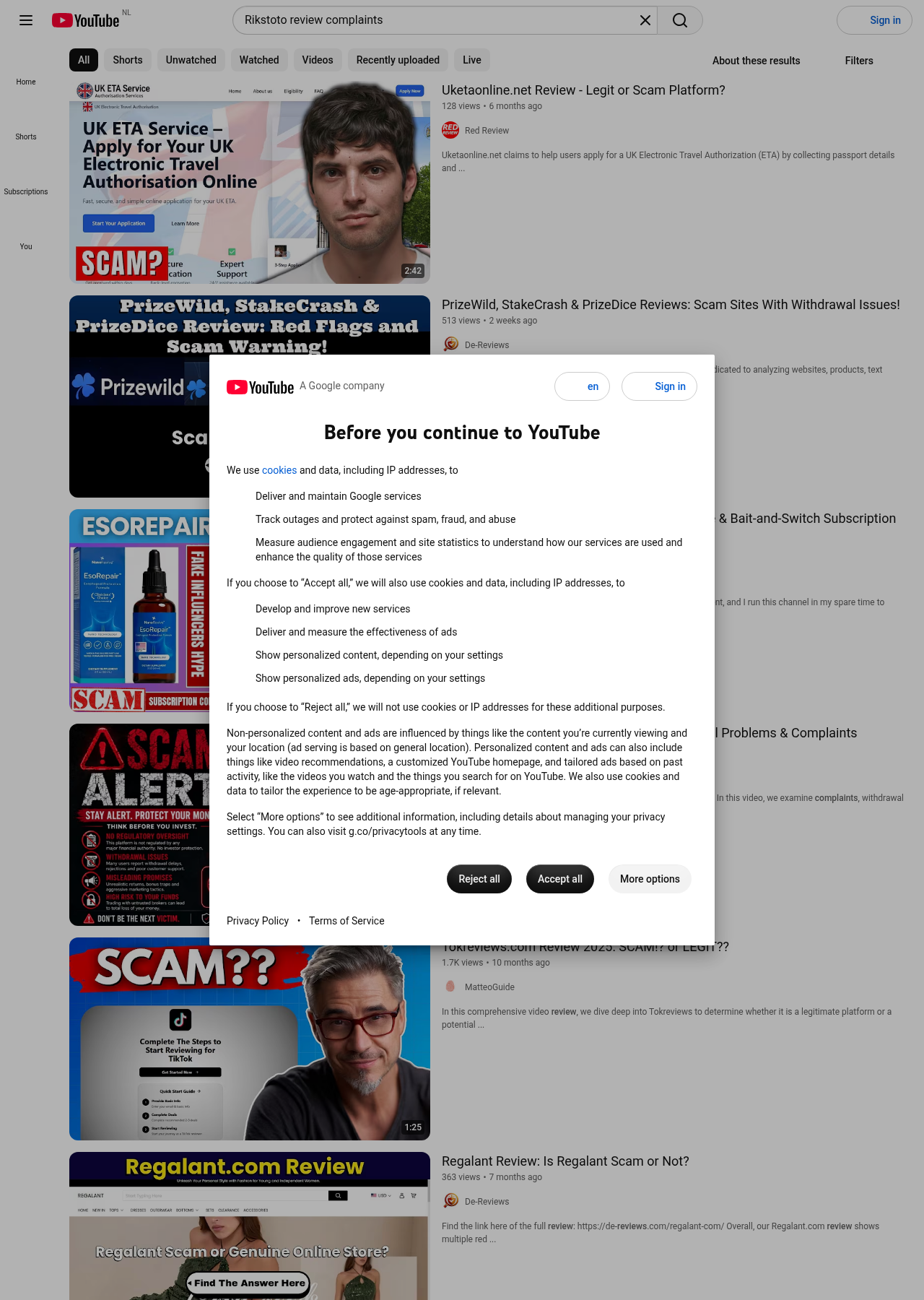
One signal may make Rikstoto look like a recognisable gambling service: a dated public-video search snapshot contains discoverable user and brand context associated with the name. That context can explain why people search for reviews, complaints or payment experiences, but it does not establish that a particular website is safe, licensed in Cyprus or operated by a verified company.
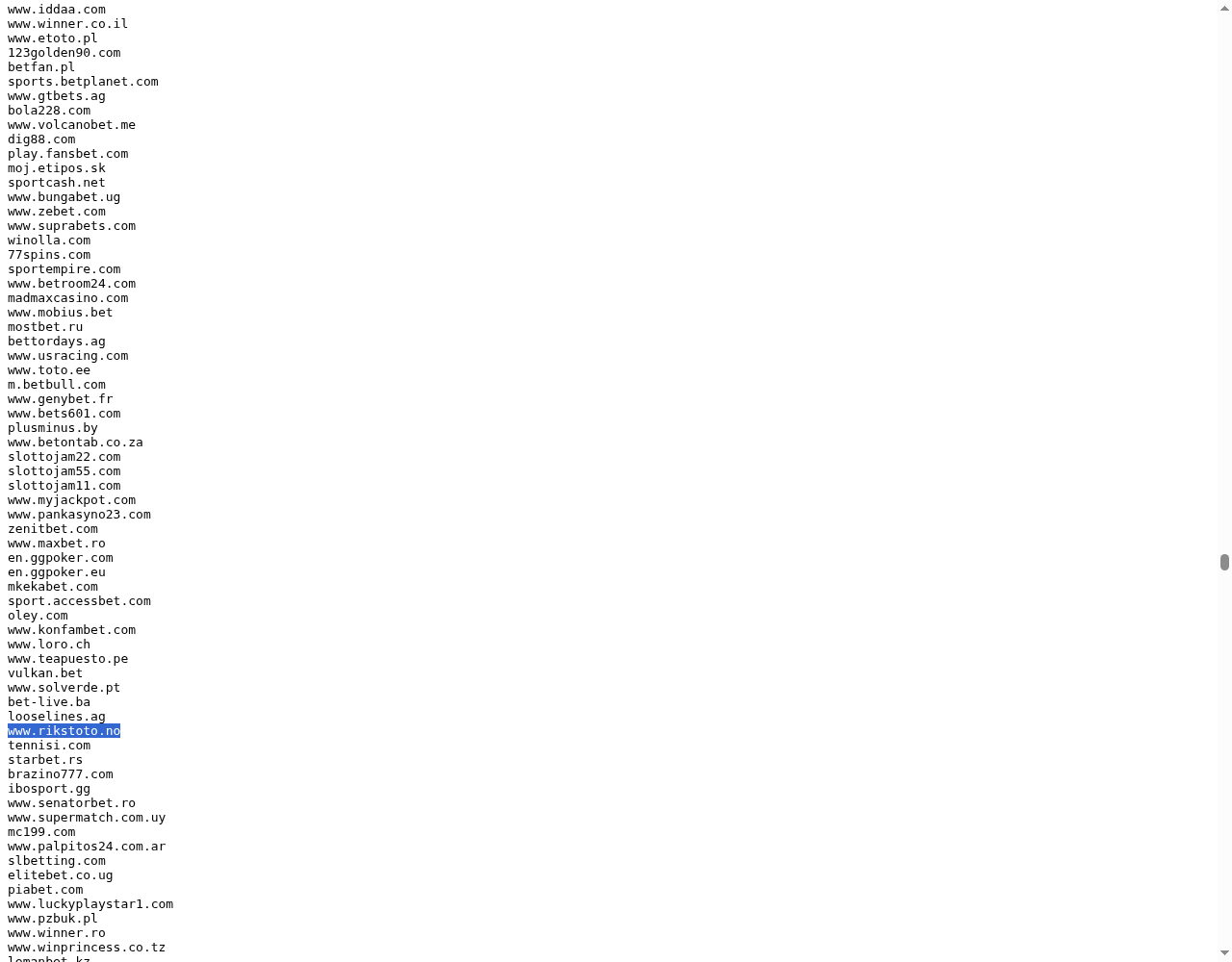
The stronger and more relevant signal points the other way. The Cyprus National Betting Authority’s current blocking-list text includes the exact recorded domain associated with the review target. The list header states that it was last updated on 19 August 2026, and the record was checked on 21 August 2026. On the supplied evidence, this is an official adverse record rather than a user allegation.
That distinction determines the verdict. The available material does not establish a Cyprus operator, a Class B licence or a lawful exact-domain match. It does establish a current blocking-list entry. The appropriate signal is therefore red: not because every online discussion is proven, and not because a payment or withdrawal complaint has been confirmed, but because the competent primary record is adverse for the precise recorded domain.

What the evidence hierarchy says
The records do not all answer the same question. A regulator’s current blocking list is the primary source for whether a domain has been recorded as blocked by the Cyprus authority. A public-video search result is only contextual user or brand material. It may show discoverability, but it cannot substitute for a licence register, a verified operator identity or a regulator decision.
The review therefore gives priority to the primary record, uses the public-video snapshot only to explain the surrounding search context, and leaves unsupported matters open. No supplied record verifies a successful deposit, a completed withdrawal, a KYC request, a complaint outcome, a refund, a corporate owner or a personal customer experience.
| Question | Supplied evidence | What can be concluded |
|---|---|---|
| Is the exact domain on an adverse Cyprus record? | Current blocking-list text, checked 21 August 2026 | Yes, the recorded exact domain is included. |
| Is there a Cyprus Class B licence match? | No exact-domain match in the supplied packet | No match is established. |
| Is the operator identified? | Cyprus primary record does not establish one | The operator remains unknown. |
| Do public videos prove safety or misconduct? | Dated search snapshot only | No; the material is contextual, not outcome evidence. |
| Are payments and withdrawals verified? | No transaction test or primary payment record | They remain unverified. |
The relevant adverse source is the current blocking-list record. Its role is limited but decisive for the domain-status question: it records the domain on the authority’s list. It does not, by itself, prove a particular customer’s loss, fraud, failed withdrawal or criminal conduct.
Domain and host matching
The supplied packet gives no exact domain string, so the name alone cannot be used to identify a safe host. This is an important limitation. A brand label may appear on several domains, through redirects, mirror addresses, mobile versions or cloned pages. A search result or logo is not a domain match.
For a Cyprus check, compare the full address character by character, including the ending, spelling, subdomain and secure connection. Do not treat a similar-looking address as the same host. Look for added hyphens, substituted letters, extra words, country-code variations and unfamiliar extensions. A padlock only indicates an encrypted connection; it does not confirm licensing or operator identity.
The primary record supplied for this dossier includes the exact recorded domain, but the packet intentionally does not reproduce that domain in the brief. Consequently, this dossier cannot certify any alternative address as genuine. If an address differs from the authority’s recorded entry, that difference is not evidence that it is authorised; it simply creates a separate identity question that requires a fresh primary check.
| Clone-check item | Safer verification approach | Result from this packet |
|---|---|---|
| Full hostname | Compare every character with the authority record | The target hostname is not reproduced here. |
| Redirect destination | Record the final address before entering credentials | Not tested. |
| Operator name | Match the legal entity in a competent licence record | Not established. |
| Licence class | Confirm the exact host, not merely the brand | No Class B exact-domain match. |
| Branding and imagery | Treat copied marks as non-probative | The supplied logo does not prove ownership. |
The logo is included as an identification aid only. It is not a regulator record, licence certificate or proof that a host belongs to the named service.
Licence and legal position in Cyprus
The supplied licence statement is specific: there is no Class B exact-domain match, and the current blocking-list entry is adverse. That means the evidence does not support describing the recorded host as a licensed Cyprus online bookmaker. It also does not support a claim that the unknown operator has a Cyprus authorisation under another class or under a different identity.
The bounded legal conclusion is therefore practical rather than absolute. Do not rely on the recorded host as a lawful Cyprus service merely because it displays a familiar name, offers a sign-up route or appears in online searches. The record supports a red warning for the exact recorded domain. It does not establish the legal status of every website that uses the same name, nor does it determine liability for any individual transaction.
| Legal question | Evidence-led answer |
|---|---|
| Is a Cyprus licence established? | No. The packet records no Class B exact-domain match. |
| Is the recorded domain on a current adverse list? | Yes, according to the supplied primary record. |
| Is the operator’s legal entity known? | No. The Cyprus primary record does not establish it. |
| Can the service be called legal based on its brand name? | No. A brand name is not a licence match. |
| Does the record prove every customer allegation? | No. No individual allegation is established by it. |
The list header’s stated update date is 19 August 2026, while the evidence check date is 21 August 2026. Those dates matter because a blocking list can change. This conclusion is tied to the dated record supplied for the review and should be corrected if a later competent record supersedes it.
Payments and deposits
No supplied source verifies a payment method, deposit limit, processing company, currency, fee, pending-deposit procedure or successful payment to the recorded host. It would therefore be misleading to present card, bank-transfer, electronic-wallet or cryptocurrency availability as a fact. The absence of a verified payment record is not proof that no payment channel exists; it is a reason not to treat an advertised channel as tested or safe.
Before considering any payment, a user would need to establish the exact host, operator and licence position independently. A payment page can be copied by a clone, and a familiar processor name does not prove that the gambling service is authorised. Avoid sending funds while the domain and operator identity remain unresolved, particularly where the precise host appears on a current official blocking list.
| Payment point | Status | Practical meaning |
|---|---|---|
| Available deposit methods | Unknown | Do not infer them from advertising or search results. |
| Fees and limits | Unknown | Any displayed figures remain unverified. |
| Payment processor identity | Unknown | A processor name does not establish lawful operation. |
| Deposit success | Not tested | No user or editorial transaction is claimed. |
| Refund process | Unknown | No verified route or outcome is supplied. |
The absence of a test protects against overstating the record. It should not be rewritten as a positive payment result, and it should not be turned into a specific allegation that money was lost.
Withdrawals, verification and account access
Withdrawal reliability cannot be rated from the packet. No withdrawal test, payout receipt, processing-time record or dated customer-resolution record was supplied. Accordingly, there is no evidence-led basis for promising fast withdrawals, alleging withheld winnings or assigning a withdrawal rating.
The same boundary applies to know-your-customer checks. No source confirms which documents are requested, when verification begins, whether accounts are restricted, how long review takes or how personal data is handled. A request for identification can be part of ordinary compliance, but an unverified website may also create privacy and security risks. Do not upload identity documents simply to test a service whose host and legal operator have not been established.
| Account stage | Verified result | What remains unknown |
|---|---|---|
| Registration | Not tested | Whether registration is available to Cyprus residents. |
| Login | Not tested | Whether access routes are genuine or cloned. |
| KYC | Not documented | Documents, timing, purpose and appeal route. |
| Withdrawal | Not tested | Processing, approval, rejection and payout timing. |
| Account closure | Not documented | Closure, balance recovery and data-retention process. |
A complaint about a failed withdrawal would need a dated, attributable record before it could be described as established. The supplied context source does not meet that standard.
Scam-or-legit assessment
The evidence supports caution, not a sweeping accusation. “Legitimate” can mean several different things: a real brand, a functioning website, an identified company, a licensed operator or a service that pays customers. The packet does not establish all of those attributes. It does establish that the exact recorded domain appears on the current Cyprus blocking list and that no Class B exact-domain match is supplied.
The red signal is consequently tied to regulatory status and domain risk. It is not a claim that every person discussing the name is dishonest, that every payment fails, or that a particular unidentified company committed fraud. The public-video search snapshot shows discoverable context only; it does not corroborate a complaint or verify a positive outcome.
For a user deciding whether to register, the practical answer is no: the supplied evidence does not support treating the recorded host as a verified, lawful Cyprus option. A different address using the same name must not inherit legitimacy from the brand. It needs its own exact-domain and operator check.
Complaints and suspected scam handling
No competent-source complaint outcome is supplied. The public-video search snapshot may contain discussion, but a search page is not a finding that a complaint is true. It also does not prove that a speaker used the Cyprus host, that a payment occurred, or that the named operator was responsible.
If money or personal data has already been provided, preserve the address used, dates, payment references, account messages and correspondence. Contact the payment provider through its established support channel and ask what dispute or security steps are available. Do not send additional funds to unlock a withdrawal, pay a release charge or satisfy an unverified “tax” request. Those are practical risk controls, not findings about this service.
For gambling-related help in Cyprus, the supplied primary support record identifies helplines 1454 and 1456, including their audiences and service hours. The Cyprus safer-gambling support programmes should be used for the applicable service information. If self-exclusion is needed, the national self-exclusion access point is the supplied route for licensed online bookmakers. These support resources do not legalise or validate the recorded host.
A repeatable verification method
Use a four-part check before trusting any gambling host. First, preserve the complete address rather than checking only the visible brand. Second, search the competent Cyprus primary record for that exact hostname. Third, match the operator’s legal name and licence details, including the licence class and current status. Fourth, check whether the service’s registration, payment and complaint information is consistent with the verified identity.
A result should be recorded with the source date. A current record outranks an undated screenshot, search snippet, social post or promotional statement. A logo can support visual recognition but cannot resolve identity. A user report can signal a question for further checking but cannot establish a general verdict without corroboration.
| Verification stage | Evidence to retain | Stop condition |
|---|---|---|
| Address | Full hostname and final redirect | The address changes unexpectedly or cannot be recorded. |
| Authority check | Dated primary register or blocking-list result | The exact host is blocked or cannot be matched. |
| Entity check | Legal operator name and licence relationship | The operator is missing or inconsistent. |
| Transaction check | No payment unless identity is established | The service asks for funds before verification. |
| Support check | Official complaint and safer-gambling routes | Only an unverified contact route is available. |
This method cannot turn missing evidence into a green signal. It can only identify whether the evidence is current, precise and relevant.
Risks and open questions
The principal documented risk is the current blocking-list entry for the exact recorded domain. A second risk is identity ambiguity: the Cyprus primary record does not establish the operator, and the packet provides no exact-domain string for independent comparison with other addresses. A third risk is transaction uncertainty because no payments, withdrawals or KYC processes were tested.
Open questions include the legal entity behind any address using the name, whether a separate domain exists, whether a later authority record changes the status, and whether any individual payment dispute has a documented resolution. None should be answered by inference from branding, search visibility or a public-video page.
| Open question | Why it matters | Current answer |
|---|---|---|
| Which legal entity operates the host? | Determines accountability and licence matching | Not established. |
| Which exact address is being offered? | Prevents clone and mirror confusion | Not reproduced in the packet. |
| Were withdrawals completed? | Tests a material service claim | No test supplied. |
| Were complaints upheld? | Separates allegation from finding | No competent outcome supplied. |
| Has the authority list changed? | Keeps the conclusion current | Supplied list checked 21 August 2026. |
Until these matters are resolved by appropriate records, the unknowns remain unknowns. They should not be filled with assumptions about ownership, customer treatment or intent.
Evidence chronology and correction path
The chronology begins with the authority list header dated 19 August 2026. The supplied evidence packet records that the list includes the exact recorded domain. On 21 August 2026, the primary list was checked for this dossier. On that same check date, a public-video search snapshot was treated as contextual only, while the self-exclusion and safer-gambling sources were recorded as primary support resources.
This sequence explains why the verdict is red despite the apparently positive signal created by public visibility. Visibility is not authorisation. The authority record is more relevant to the exact-domain legal question and carries the higher evidence tier.
A correction should preserve the original claim, identify the new dated competent record and explain precisely what changed: for example, an updated blocking-list status, a verified exact-domain licence match or a formally identified operator. A later promotional page, anonymous comment or undated screenshot would not by itself justify changing the signal. The correction route is through the site’s editorial policy and contact route; those internal routes do not replace the authority’s record.
Bounded verdict and next step
On the supplied evidence, Rikstoto’s exact recorded host receives a red signal for Cyprus. The current primary blocking-list entry is adverse, no Class B exact-domain match is established, and the operator is not established by the Cyprus primary record. Payments, withdrawals, KYC, complaint outcomes and customer experiences remain unverified.
The conclusion is deliberately bounded. It does not declare that every use of the name is fraudulent or that every online discussion is false. It says that the recorded host should not be treated as a verified, lawful Cyprus option on the evidence available for this review. Do not rely on the logo, search visibility or a similar-looking domain to overcome the exact-domain warning.
For a broader explanation of how these checks are applied, see the English methodology guide. If the exact host later receives a verifiable primary status change, the record and conclusion should be reassessed rather than silently assumed. If a user nevertheless proceeds to an unverified service, the absence of tested payment and withdrawal evidence should be treated as a material risk.
Frequently asked questions
Is Rikstoto a scam or legitimate in Cyprus?
On the supplied evidence, the exact recorded host receives a red signal because it appears on the current Cyprus blocking list and has no established Class B exact-domain match. This does not prove that every discussion or every address using the name is fraudulent. It means the recorded host should not be treated as a verified, lawful Cyprus option.
Is Rikstoto licensed in Cyprus?
No Cyprus licence is established by the packet. The supplied licence position is that there is no Class B exact-domain match, while the current blocking-list record is adverse. The operator’s legal identity is also not established by the Cyprus primary record.
Can I trust a different domain using the same name?
No. A different domain needs its own exact-host, operator and licence check. A shared brand name, copied logo, redirect or similar spelling does not transfer legitimacy from one address to another and cannot overcome an unresolved identity question.
Are payments and withdrawals verified?
No. The packet contains no payment test, withdrawal test, payout receipt, processing-time record or verified customer-resolution record. Payment methods, fees, limits, KYC steps and withdrawal performance must therefore be treated as unknown rather than as positive or negative results.
Where can I get gambling support or self-exclusion help?
The supplied Cyprus support record identifies helplines 1454 and 1456, with their audiences and service hours. The national self-exclusion access point is available for licensed online bookmakers. These resources provide support and exclusion assistance; they do not validate the recorded host.
How can this verdict be corrected?
A correction should rely on a later dated competent record, such as an updated authority entry or a verified exact-domain licence match. It should identify what changed and preserve the distinction between primary evidence, operator statements, user context and unknowns. An anonymous comment, promotional page or undated screenshot is not enough on its own.
Microsoft Bing