Stoiximan Cyprus: licence, KYC and payment checks
An identity-document mismatch can turn an ordinary account check into a frozen-registration or withdrawal problem. A shortened first name, an outdated address, a payment card belonging to somebody else or an unclear photograph may all require clarification. None of those events alone proves fraud. They do, however, make it important to separate three questions: whether the named operator appears in the Cyprus register, whether the exact website being used belongs to that licensed operation, and whether the account holder can satisfy the service’s identity and payment checks.
The current primary record supplied for review supports STOIXIMAN LTD as a Class B operator under licence B018 for 31 January 2025 to 30 January 2027. That is strong evidence for the named legal entity and licence period. The packet does not state an exact authorised domain, so it cannot establish that an arbitrary hostname, advert, message or lookalike address is genuine. The resulting signal is green for the supplied operator-and-licence match, not a blanket approval of every address using the name.

Verdict: legitimate operator record, unresolved hostname
The evidence answers the central “scam or legit in Cyprus” question in a qualified way. STOIXIMAN LTD appears in the current Class B register evidence supplied, with licence B018 and the stated active period. A current regulator entry is materially stronger than an advert, social-media comment, search result or visual resemblance. It supports the legitimacy of the named licensed operation in Cyprus.
It does not follow that every website, application, email account or payment request carrying the same branding is legitimate. The packet omits the authorised domain text from the relevant register row. Because the exact-domain field is blank, no specific hostname can be endorsed here. Users should compare the address they intend to visit with the regulator’s live entry rather than trusting a search advertisement, forwarded link or familiar colour scheme.
| Question | Supported conclusion | Important limit |
|---|---|---|
| Is the named company in current primary evidence? | Yes. STOIXIMAN LTD is identified in the supplied Class B register record. | Company status does not authenticate every website using its name. |
| Is a Cyprus licence identified? | Yes. B018, stated for 31/01/2025–30/01/2027. | The status should be rechecked if used after the recorded verification date. |
| Is an exact authorised hostname supplied? | No. | Do not infer a domain from the brand name or a search result. |
| Is there a verified withdrawal test? | No withdrawal test was supplied. | Speed, success rates and limits cannot be claimed. |
The appropriate practical verdict is therefore narrow: the operator-and-licence record has current primary support, while website identity, individual account treatment and transaction performance still need their own checks.
Cyprus licence and legal-entity match
The National Betting Authority’s Class B register is the decisive source in the packet for legal status. The accepted record was checked on 21 August 2026 and is described as listing operators, domains, licence numbers, status and duration. For the entity under examination, the supplied facts identify STOIXIMAN LTD, licence B018 and the period 31 January 2025 through 30 January 2027.
Those elements should be matched as a set. A similar trading name without the same legal entity is not enough. A licence number quoted without the company name is also insufficient, because copied licence details can be placed on an unrelated website. The strongest check compares the regulator’s operator name, licence number, status, duration and authorised domain directly against the service being used.
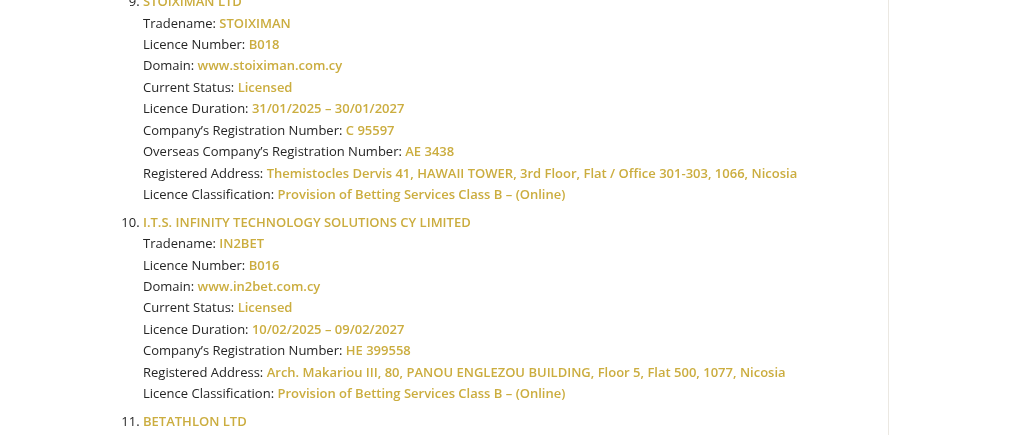
| Register field | Supplied record | How to use it |
|---|---|---|
| Legal entity | STOIXIMAN LTD | Compare spelling and company identity, not only the trading name. |
| Licence class and number | Class B, B018 | Require the number and entity to appear together in the official record. |
| Stated duration | 31/01/2025–30/01/2027 | Check that the relevant date falls within the period and that status remains current. |
| Authorised domain | Not reproduced in the packet | Read it from the live regulator entry before visiting or paying. |
| Evidence check date | 21/08/2026 | Treat later changes as requiring a fresh check. |
The supplied dates create no basis for claiming permanent legality. Licences can expire, change status or be replaced. The licence and law guide explains how the Cyprus register fits into a wider legal check, but the official record remains the controlling evidence for the precise entity.
Hostname and clone checks before signing in
The most consequential gap is the absent exact domain. A clone can reproduce branding, promotional language and even licence details. A logo therefore proves almost nothing about who controls a hostname. Before entering credentials, open the regulator register independently and compare its domain character by character with the address bar.
Check the full hostname, not just the recognisable word. Look for added hyphens, substituted letters, unusual prefixes, extra words or a different ending. A secure-connection symbol only confirms that traffic is encrypted to that hostname; it does not establish that the site belongs to STOIXIMAN LTD. Search-engine placement is also not proof, because advertisements and newly created lookalikes may appear above an expected result.
| Check | Reassuring result | Stop signal |
|---|---|---|
| Regulator comparison | Exact hostname appears beside the matching entity and licence. | The hostname is absent, different or cannot be compared. |
| Address-bar spelling | Every character matches the official entry. | Extra words, swapped letters, unfamiliar subdomains or altered endings. |
| Sign-in route | Reached from a regulator-confirmed address. | Link received through an unsolicited message or copied advert. |
| Payment instructions | Displayed inside the verified account flow and in the account holder’s name. | Request to pay a person, unrelated company, wallet or account supplied by chat. |
| Support contact | Contact details reached through the verified service. | Pressure to continue through a private messaging account. |
If any element fails, do not sign in, upload identification or send money. Save the address and relevant screenshots without interacting further. The complaints and scam-warning route provides a structured way to record a suspicious approach. The green signal must never be transferred from the verified legal entity to an unverified hostname.
Account ownership and KYC mismatch risks
Know-your-customer checks are intended to connect an account with a real person. The packet contains no operator terms describing the precise documents, review sequence or processing times used for this service, so those details cannot be stated as facts. The safe preparation principle is narrower: account information, identity documents and payment ownership should be internally consistent.
A mismatch may be innocent. Examples include a middle name missing from registration, a recently changed surname, a transliteration difference, an old residential address or a document image with cropped edges. The sensible response is not to create another account or alter information repeatedly. Keep the original details, prepare a brief explanation and use the support route reached from the regulator-confirmed hostname.
Documents should be uploaded only through a verified channel. Do not email a passport, identity card or bank statement to an address obtained from a search result or unsolicited message. Before submission, identify why each item is requested, whether the upload destination belongs to the confirmed service and whether unnecessary information may be masked without making the document unacceptable. The packet does not establish the operator’s masking rules, so permission should be confirmed first.
Account ownership also matters where one person registers while another funds or controls play. Even without a supplied operator rule, that pattern creates an obvious identity inconsistency and can complicate verification. Use only personal, accurate registration details. Do not lend an account, accept instructions to pass verification for someone else or allow another person to conduct the KYC conversation.
No personal KYC outcome has been tested. A green regulatory signal does not predict whether a specific document will be accepted, how long review will take or whether additional evidence will be requested.
Payments and withdrawals: what is known
No verified list of deposit methods, withdrawal methods, fees, limits, currencies or processing times was included. No controlled deposit or withdrawal test exists in the packet. Claims that cash-outs are instant, consistently successful or available through a particular provider would therefore be unsupported.
The key risk check is payment-name alignment. The name attached to a card, bank account or other funding instrument should match the verified account holder. A third-party payment can create uncertainty about ownership, source of funds and the proper destination for a refund or withdrawal. If the names differ because of a lawful name change or a joint account, obtain instructions through verified support before depositing rather than assuming the difference will be accepted.
| Transaction stage | Evidence to retain | Question to resolve |
|---|---|---|
| Before deposit | Method name, displayed fees, limits and account-holder details | Does the payment instrument belong to the registered person? |
| After deposit | Confirmation, amount, date, reference and balance change | Did the credited amount match the authorised transaction? |
| Before withdrawal | Displayed verification request and destination details | Is withdrawal being returned to an account owned by the same person? |
| While pending | Submission time, status changes and support references | Has the operator requested specific missing information? |
| After completion | Final amount, completion time and any deduction | Did the received amount match the recorded outcome? |
Record what the account actually displays before confirming a transaction. Avoid relying on promotional summaries or old third-party descriptions. The payment-check guide can be used to organise names, references and timestamps. If a withdrawal is delayed, distinguish between a pending verification request, a stated processing window and a refusal. They are not interchangeable, and the packet establishes none of them for an individual case.
Building a useful complaint packet
A complaint is more effective when it presents a short chronology and a specific requested remedy. Begin with the registered account name, without publishing sensitive document numbers. Add the confirmed hostname, relevant transaction references, dates, amounts, account-status messages and support case numbers. Preserve original files and unedited screenshots; use redacted copies when sharing beyond the operator or competent authority.
The first contact should normally be the operator’s official support or complaint channel reached from the regulator-confirmed address. State the issue precisely: for example, an identity field does not match a document, a transaction has not been credited, a withdrawal remains pending, or an account decision lacks an explanation. Ask what evidence is missing and what next step applies. Do not describe an unresolved delay as theft unless competent evidence establishes that conclusion.
A practical chronology should contain:
- the date and time the account or payment event occurred;
- the exact hostname visible during the event;
- the amount and transaction reference, where relevant;
- the wording of any KYC or account message;
- each support contact, response and case number;
- the outcome requested, such as correction, explanation or return of funds.
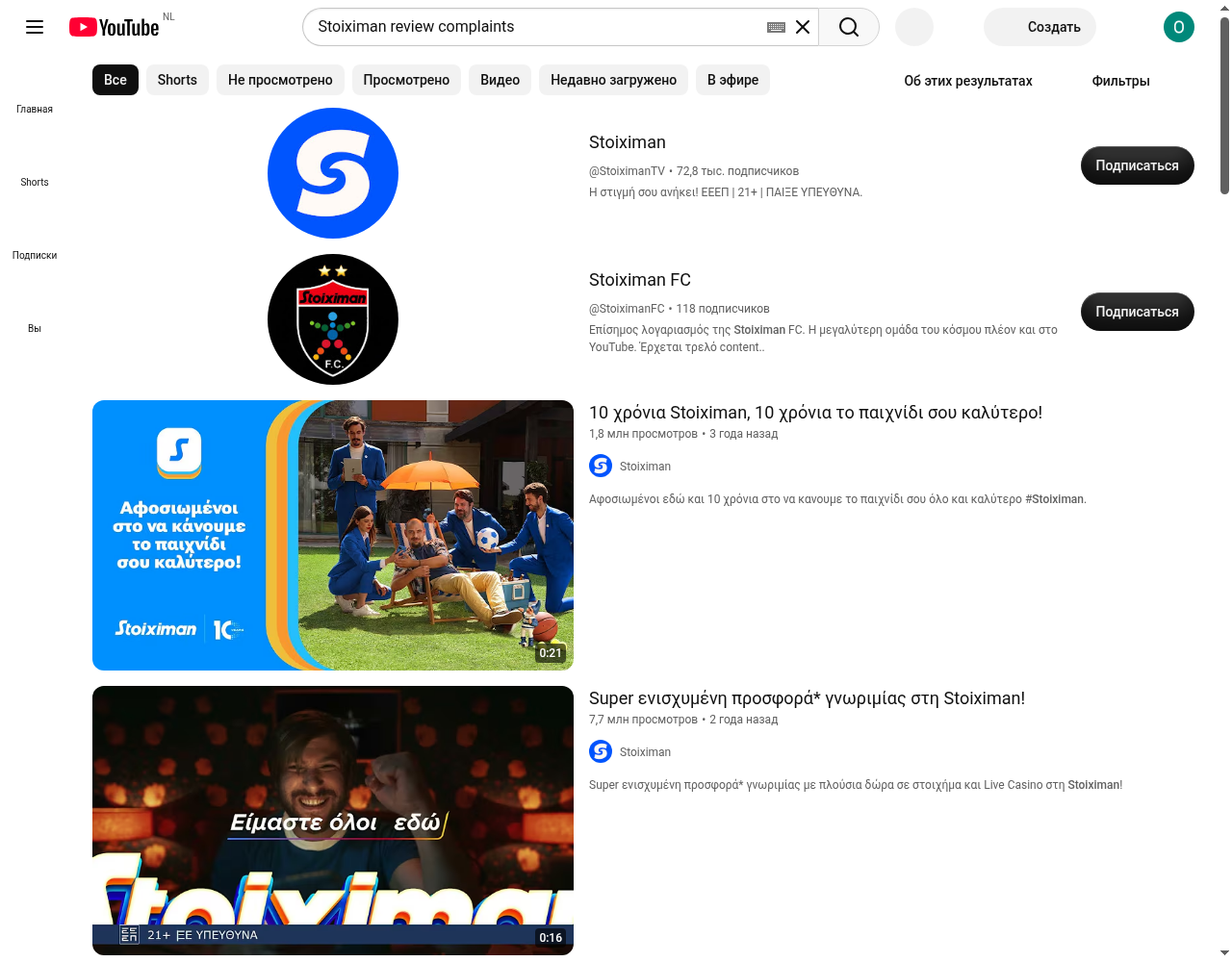
Keep authentication secrets, full card numbers and document images out of public posts. If escalation becomes necessary, submit only material relevant to the dispute and follow the competent recipient’s instructions. An online allegation or video is not a regulatory finding. The supplied user-context capture merely shows discoverable discussion around the name; it does not verify any complaint or prove Cyprus applicability.
Privacy, safer gambling and urgent boundaries
Identity and payment disputes involve sensitive information. Share the minimum needed through a verified recipient. A complaint narrative can usually identify a document mismatch without reproducing the document number. Public uploads may expose addresses, signatures, birth dates, account balances or transaction identifiers long after the dispute ends. The privacy information gives the local handling framework for enquiries submitted through this service.
If the issue is loss of control rather than a technical transaction dispute, complaint preparation should not delay protective action. Cyprus provides a national self-exclusion access point for licensed online bookmakers. The supplied primary record identifies it as the relevant national access point; it does not establish the outcome of any individual application.
The safer-gambling programme record also lists help and support services, including helplines 1454 and 1456 with specified audiences and service hours. Check the official service information for current availability. The responsible-gambling route collects additional practical boundaries, while urgent help is appropriate when gambling-related harm needs immediate attention.
Self-exclusion, account closure and a transaction complaint serve different purposes. Protective action can limit access, but it does not by itself decide a disputed payment. Conversely, a payment investigation does not create a safer-gambling barrier. Keep the records separate while clearly identifying any overlap.
Evidence chronology, unknowns and correction path
The conclusion rests on a compact packet rather than broad assumptions. The Class B register record, national self-exclusion point and safer-gambling programme information were each checked on 21 August 2026. The public-video search capture has the same check date but remains contextual evidence only. It cannot support a finding that a complaint is true, that the operator is unsafe or that a video concerns the licensed Cyprus service.
| Date checked | Record | What it supports | What it cannot support |
|---|---|---|---|
| 21/08/2026 | Class B register | STOIXIMAN LTD, B018 and the supplied licence period | Authentication of a hostname omitted from the packet or any transaction outcome |
| 21/08/2026 | National self-exclusion service | Availability of the national access point | Individual enrolment status or account closure outcome |
| 21/08/2026 | Safer-gambling programmes | Helplines 1454 and 1456, audiences and service hours | Clinical advice or guaranteed availability outside published hours |
| 21/08/2026 | Public-video search capture | Discoverable user and brand context | Truth of a complaint, legal breach or Cyprus relevance |
Material unknowns include the exact authorised domain text, payment-method list, withdrawal rules, KYC document requirements, complaint deadlines, transaction performance and any individual account outcome. These gaps are deliberate boundaries, not negative findings. The methodology explains why primary records outrank operator statements and user context.
Corrections should identify the disputed sentence and provide a dated primary record or directly relevant document. Do not send passwords, full payment credentials or unredacted identity documents. Use the contact route for a correction request. A later regulator change, corrected hostname record or new competent finding should trigger reassessment of both the signal and the affected claims.
Readers who have independently matched the live regulator entry, exact hostname and account conditions can Check before play. This is the sole commercial route; it does not replace identity, affordability or safer-gambling checks.
Frequently asked questions
Is Stoiximan a scam or legitimate in Cyprus?
Current primary evidence supports STOIXIMAN LTD as a Cyprus Class B operator under licence B018 for 31 January 2025 to 30 January 2027. That supports the named licensed operation. It does not authenticate every website, message or payment request using the name, and no individual transaction outcome was tested.
Which Stoiximan domain is authorised in Cyprus?
The evidence packet does not reproduce the exact authorised domain, so no hostname can be endorsed from the supplied facts. Compare the address character by character with the live Class B register before signing in, uploading identity documents or depositing money.
Does the green signal guarantee safe withdrawals?
No. The green signal reflects current primary support for the operator-and-licence match. No controlled withdrawal test, processing-time record, fee schedule or success-rate evidence was supplied. A particular withdrawal must be assessed using its status, verification requests, timestamps and transaction records.
What should I do if my identity document does not match my account?
Do not create another account or repeatedly change details. Record the exact mismatch, prepare an accurate explanation and contact support only through the regulator-confirmed hostname. Ask which evidence is required and whether unnecessary document information may be masked before sending anything.
Can I deposit with another person’s card or bank account?
No supplied rule establishes how the operator handles every third-party payment, but a name mismatch creates a serious ownership and verification risk. Use a payment instrument belonging to the registered account holder, or obtain written instructions through verified support before attempting a transaction.
How should I report a suspicious clone or unresolved complaint?
Preserve the exact hostname, dates, messages, transaction references and screenshots. Contact the operator through a regulator-confirmed channel and state the remedy requested. If escalation is needed, provide relevant, redacted evidence to the competent recipient; do not publish identity documents or describe an unproven allegation as an established fact.
Microsoft Bing