Hajper in Cyprus: blocked domain, unidentified operator, locked accounts
A player in Limassol opens an account on a Thursday evening, deposits, wins over the weekend, and asks for the money on Sunday night. The login form returns nothing, then a verification prompt, then silence. By Monday the address will not resolve on a Cyprus home connection at all. That sequence, access followed by a deposit followed by a wall, is the pattern behind most of the account-access reports we receive about Hajper, and the evidence below is arranged to answer the three questions it raises: who holds the account, who holds the money, and which body in Cyprus can be made to look at either.

The blocking-list record that sets the signal
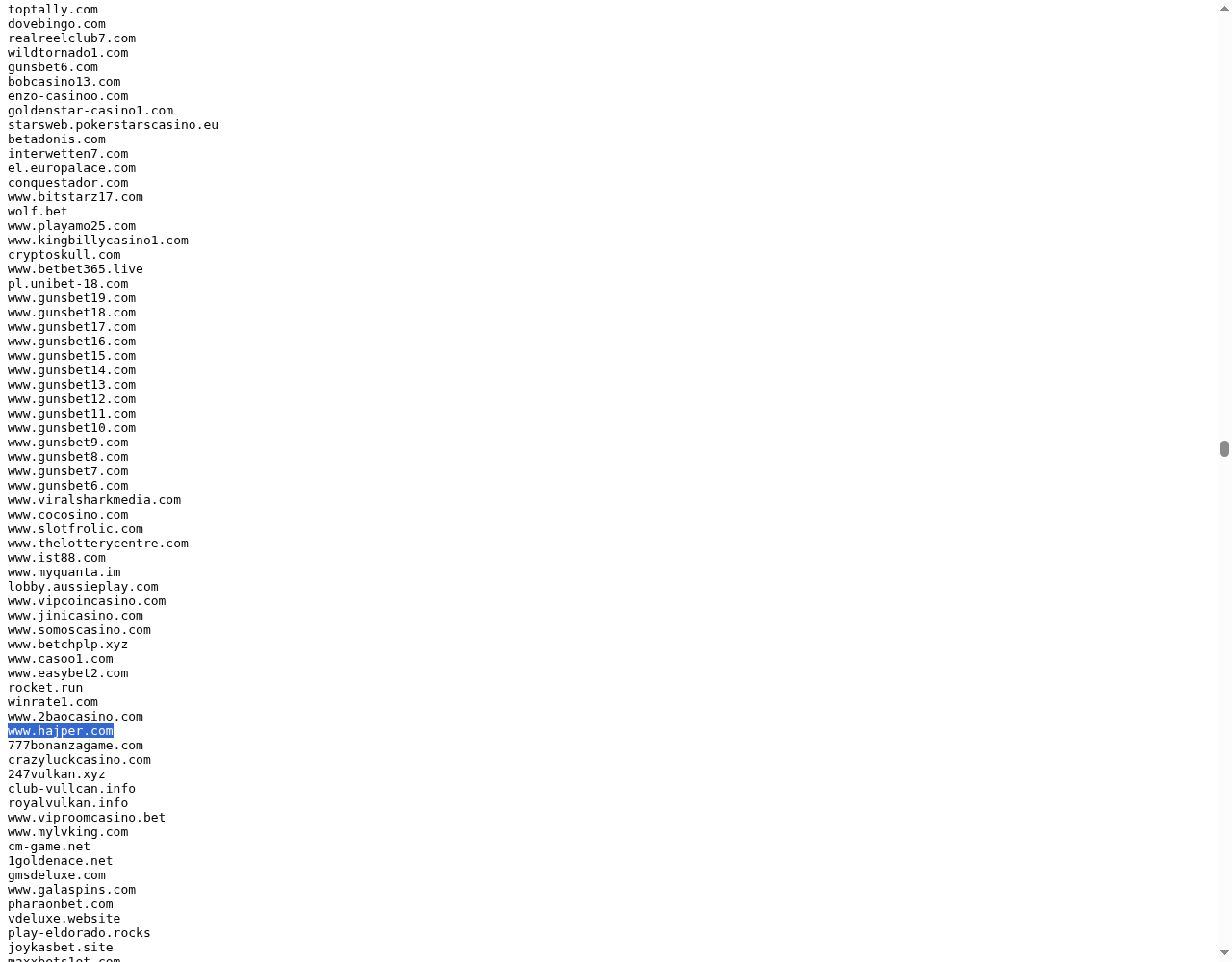
The current primary document behind the assessment is the National Betting Authority's blocking list, published as a single plain-text file and refreshed on a rolling basis. The version read on 21 August 2026 carries a header stating a last update of 19 August 2026, and the recorded domain appears inside it. Read it at source rather than through anyone's screenshot: the authority's blocking list file is flat text, searchable with Ctrl+F in a browser tab, and it changes without notice. The literal host string held in the ledger is not reprinted, because a one-character slip in a domain sends a reader to a completely different address; matching the string yourself, inside the authority's own file, is the check that carries weight. An entry there is an official adverse record about one specific host, which is why the status sits at red rather than amber.
Who runs the service, and what the record leaves blank
Nothing in the Cyprus primary record establishes which company stands behind the brand. No licensee name, no registration number, no registered address and no group structure attaches to the recorded host, and none of those blanks is filled by copy published on a site that Cyprus connections may not even reach. The gap matters more than it looks. A locked account is a contract dispute, and a contract dispute needs a counterparty who can be named, served and complained about. Where the counterparty is unidentified, the workable remedies shrink to the parties you can name: your bank, your card scheme, your wallet provider. Treat any corporate name shown in a footer, a chat transcript or a bonus email as an operator statement rather than a fact, and store it as a dated screenshot instead of a belief. The chain a matched Cyprus authorisation would produce, set against what exists today for Hajper, looks like this.
| Element of a verifiable chain | What a matched Cyprus record would show | Current state |
|---|---|---|
| Licence class | Class B authorisation covering online betting | No Class B exact-domain match |
| Licensee legal name | Registered company named on the authority record | Not established |
| Company registration number | Number traceable to a company register | Not established |
| Authorised domain | Exact host string tied to the licensee | Recorded host appears on the blocking list instead |
| Licence validity dates | Dated grant and expiry | Not established |
Licence test: brand recognition is not an exact-domain match
Cyprus authorisation for online betting runs on Class B, and the decisive check is exact-domain: the host string a player actually loads must be the string carried on the authority's record for a named licensee. A Greek-language interface, euro balances, a Cypriot phone prefix in a support widget or a licence badge near the footer are decoration, and none of them creates authorisation. For the recorded host there is no Class B exact-domain match, and the same host sits on the blocking file, so the two findings point in one direction rather than leaving room for interpretation. Two failure modes are worth naming because both mislead readers. The first is brand-level reasoning: a group holding Cyprus authorisation for one domain does not thereby cover a second domain it also markets. The second is the mirror image, assuming a site is acceptable because it has not appeared on the list yet. Absence from a blocking file is not authorisation either. Current class definitions are kept together in our licence and law explainer.
Scam or legit: what a red status claims, and what it does not
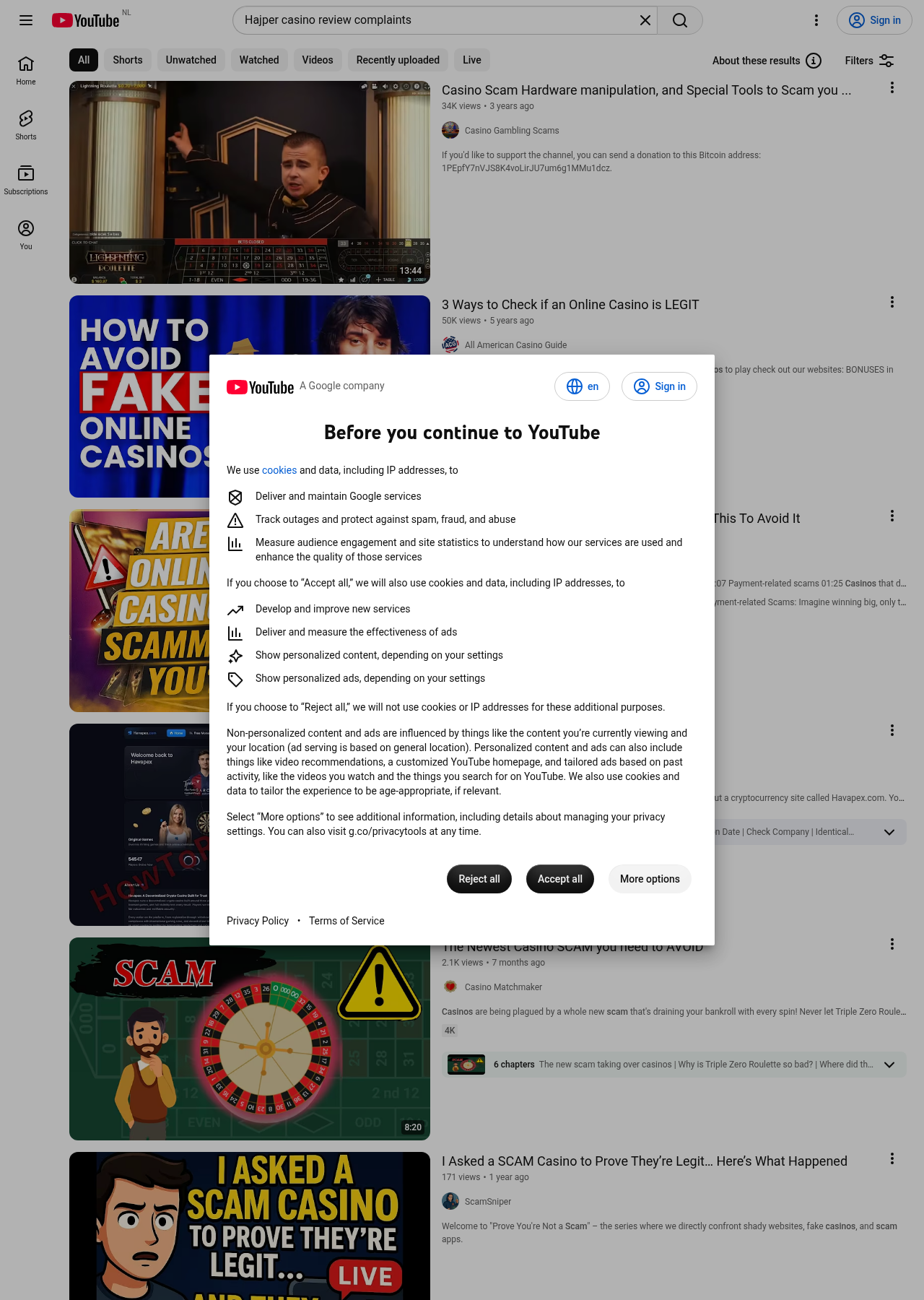
Red carries one meaning here: an official adverse record exists for the exact recorded host. It is not a finding that anyone stole money, refused a withdrawal or rigged a game, and it should not be quoted that way. What the ledger holds on sentiment is a dated public-video search snapshot showing that reviews and complaint chatter about Hajper are discoverable. That snapshot verifies discoverability and nothing further: not the truth of any single complaint, not an outcome, not whether the complainant was in Cyprus, not even whether the site involved was the recorded host or a lookalike. An allegation stays an allegation until a dated record from a competent body says otherwise, and no material in hand does that. The defensible summary for a Cyprus resident is narrower and more useful than a verdict on Hajper's conduct: the host is on the state blocking file, no Class B record supports it, the identity behind it is unestablished, and money placed there has no local regulatory backstop.
Locked accounts and the verification trap
The pattern that brings most readers to an account-access check begins after a win: a verification request, a document upload, then an account that stops opening. Nothing in the record establishes the service's verification policy, its document requirements, its stated timelines, or whether any particular account was frozen, closed or refused, so every claim about verification belongs in your evidence file rather than in an argument. The caution runs sharper than usual. Sending a fresh identity package, meaning passport scan, selfie, utility bill and card photograph, to a host with no identified operator and no Cyprus authorisation places a complete identity kit in unknown hands, and no pending balance justifies that trade. Where documents have already gone, keep an exact dated list of what was sent, treat the exposure as live, watch for unexpected credit enquiries, and consider replacing the card you photographed. If the pull to keep playing is the real problem, our responsible gambling material is a better first stop than another support ticket.
Money on the table: building your own balance evidence
Withdrawals cannot be tested against a blocked host, and no withdrawal test exists in the record for this operator, so the only dependable evidence about your balance is evidence you create yourself, ideally before anything else disappears. Screenshots need context to hold value later: capture the full browser window with the address bar and the system clock visible instead of a cropped balance figure. Where the interface allows it, save transaction history as a print-to-PDF rather than an image. Pull the deposit trail from your own bank or card statement, including the merchant descriptor, exact timestamps and any authorisation or reference numbers, because that record sits with an institution that answers to you. Keep ticket numbers, email headers and chat exports with their dates intact. A dispute assessed six weeks later turns on dull dated material rather than recollection, and the checklist below is ordered by what decays fastest.
| Step | Action | Where it happens | Why it matters |
|---|---|---|---|
| 1 | Full-window screenshots and PDF export of balance and history | Your device, before any further login attempt | Interfaces and access can change overnight |
| 2 | Deposit trail with descriptors, timestamps, reference numbers | Bank or card statement | Held by an institution that answers to you |
| 3 | Match the host string character by character | Authority's published blocking file | Confirms which entity the record covers |
| 4 | Ask your issuer for reason code and filing deadline | Card issuer or wallet provider | The only mechanical route to the money |
| 5 | Log the case with dates and captures | Our complaints route | Allows comparison across reader reports |
Deposit routes and the dispute window that actually exists
No payment method is verified for the recorded host in the material available, so none is named; a list of plausible logos would be invention, and invention is what a dispute cannot survive. What can be stated is where recovery lives. Whatever route carried the deposit, the recoverable path runs through your own provider rather than through the site. A card scheme dispute is opened with the issuing bank, and issuers work to fixed limits counted from the transaction or the expected service date, so weeks of delay can matter more than the merits of the case. Bank transfers are the least reversible of the common routes, and instant-transfer or crypto rails usually offer no reversal at all. Put two concrete questions to your issuer: which dispute reason code applies to a gambling transaction that produced no withdrawal, and what the filing deadline is on your specific transaction dates. Our payment checks material covers how to record a deposit trail in a form a bank will accept.
Escalation inside Cyprus: authority, provider, support
Escalation runs on three separate tracks, and mixing them wastes weeks. The first is the authority that publishes the blocking file, where reports about an unauthorised host belong; the useful attachment is a dated capture of the host string together with your account and deposit records. The second is your payment provider, the only party with a mechanical route to the funds. The third is harm support, which is independent of any dispute outcome. National self-exclusion is available through the state self-exclusion access point, with one limitation worth stating plainly: it covers licensed online bookmakers, so it cannot restrain an unlicensed host that ignores the register in the first place. Blocking the payment instrument is the equivalent lever when an operator sits outside the system. Where a locked balance at Hajper is involved, log it through our complaints and scam warnings route so patterns across reader reports can be compared.
| Support channel | Access | Published detail |
|---|---|---|
| State helpline | 1454 | Audiences and service hours are published on the state safer gambling programmes page |
| State helpline | 1456 | Audiences and service hours published on the same programmes page |
| National self-exclusion | exclusion.cy | Covers licensed online bookmakers only |
For an immediate crisis, our urgent help contacts list the fastest routes.
Clone, mirror and lookalike checks before any deposit
A blocked brand rarely vanishes; it reappears at a near-identical address, which is why the string rather than the logo is the unit of verification. Compare character by character against the authority's file, watching for inserted hyphens, doubled letters, swapped endings such as .com against .net or a country suffix, homoglyphs like the digit one standing in for a lowercase L or rn reading as m, and appended marketing tags such as -cy or -bet. Never arrive through a search advertisement or a messaging-app link. Type the address, then open the certificate details in the browser and read the name it was issued to. If an app listing claims the brand, check the developer name against a verifiable operator identity, which for Hajper is currently none. Two symmetrical mistakes are worth avoiding: a mirror carrying the same brand is not automatically the recorded entity, and a slightly different string is not automatically authorised. Each address needs its own check against the published list, before money moves rather than after.
Open unknowns, residual risk and what would move the rating
The open questions are substantial, and they are the reason the outcome is stated as a status rather than a story. Unestablished on the current record: the legal identity and jurisdiction of the operator; whether any licence is held elsewhere; which processors handle deposits; the verification policy applied to accounts; how balances are treated once a host is blocked locally; and whether any complaint has ever produced a documented outcome. None of that is inferred in either direction. The status would move only on new primary material. Removal of the host from the published blocking file, combined with a Class B record naming a licensee and the exact domain, would support a green assessment. A documented adverse decision from a competent body would add a second pillar to the current position. Until one of those exists, anyone in Cyprus who simply wants a bet placed tonight should start from a host whose licence and domain match on the authority's own record: Check before play, or browse the directory of checked entries first.
Evidence chronology, method and corrections
Every check behind the assessment was carried out on 21 August 2026, against a blocking file whose own header states a last update of 19 August 2026. Those two dates stay separate on purpose, because the file changes without notice and a reader arriving later may find a different list. The method, briefly: the exact host string is matched against the authority's published file rather than against search results or brand pages; identity and licence facts are accepted only from primary records; operator statements are labelled as statements; user chatter is kept as context and never promoted to proof; and no withdrawal, payout or support experience is described unless a dated test exists, which for Hajper it does not. Corrections follow the same discipline as the original check: send the dated primary document through our contact route, and the entry is amended or the status changed on the record instead of on argument. Our method and editorial standards are published in full.
| Checked on | Record | Tier | Supports | Cannot support |
|---|---|---|---|---|
| 2026-08-21 | Blocking list text file, header dated 19/08/2026 | Primary | Presence of the recorded domain on the current list | Fraud, theft or any payout finding |
| 2026-08-21 | Public-video search snapshot | User context | That reviews and complaint chatter are discoverable | Truth of a complaint, outcome, or Cyprus applicability |
| 2026-08-21 | National self-exclusion access point | Primary | Availability of self-exclusion for licensed bookmakers | Any restraint on an unlicensed host |
| 2026-08-21 | State safer gambling programmes | Primary | Helplines 1454 and 1456, with published audiences and hours | Dispute or recovery outcomes |
Frequently asked questions
Is Hajper legal to use from Cyprus?
The recorded host appears on the National Betting Authority blocking list read on 21 August 2026, and no Class B record matches the exact domain. On that evidence it is not an authorised Cyprus betting host, and a player there has no local regulatory backstop for a disputed balance.
Does the blocking entry mean Hajper took my money?
No. A blocking entry is an official record about a host, not a finding of theft or a refused withdrawal. No dated decision from a competent body establishes any specific payout failure, so complaints remain allegations, and the money question is pursued through your payment provider.
My account is locked after a win, what should I do first?
Freeze the evidence before it changes: full-window screenshots with the address bar and clock visible, a PDF of the transaction history, ticket numbers, and the deposit trail from your bank statement with descriptors and timestamps. Then ask your card issuer about dispute deadlines.
Should I send new identity documents to pass verification?
Sending a full identity package to a host with no identified operator and no Cyprus authorisation places passport, selfie and address data in unknown hands. Where documents have already been sent, keep a dated list of them, watch for unexpected credit enquiries, and consider replacing the exposed card.
Will national self-exclusion stop me playing there?
The state self-exclusion access point covers licensed online bookmakers, so it cannot restrain an unlicensed host. Blocking the payment instrument through your bank, alongside device-level restrictions, is the equivalent lever, and the state helplines 1454 and 1456 provide support in parallel.
What would change the red status?
New primary material only. Removal of the host from the published blocking file, together with a Class B record naming the licensee and the exact domain, would support a green assessment. A documented adverse decision from a competent body would reinforce the current one.
Microsoft Bing